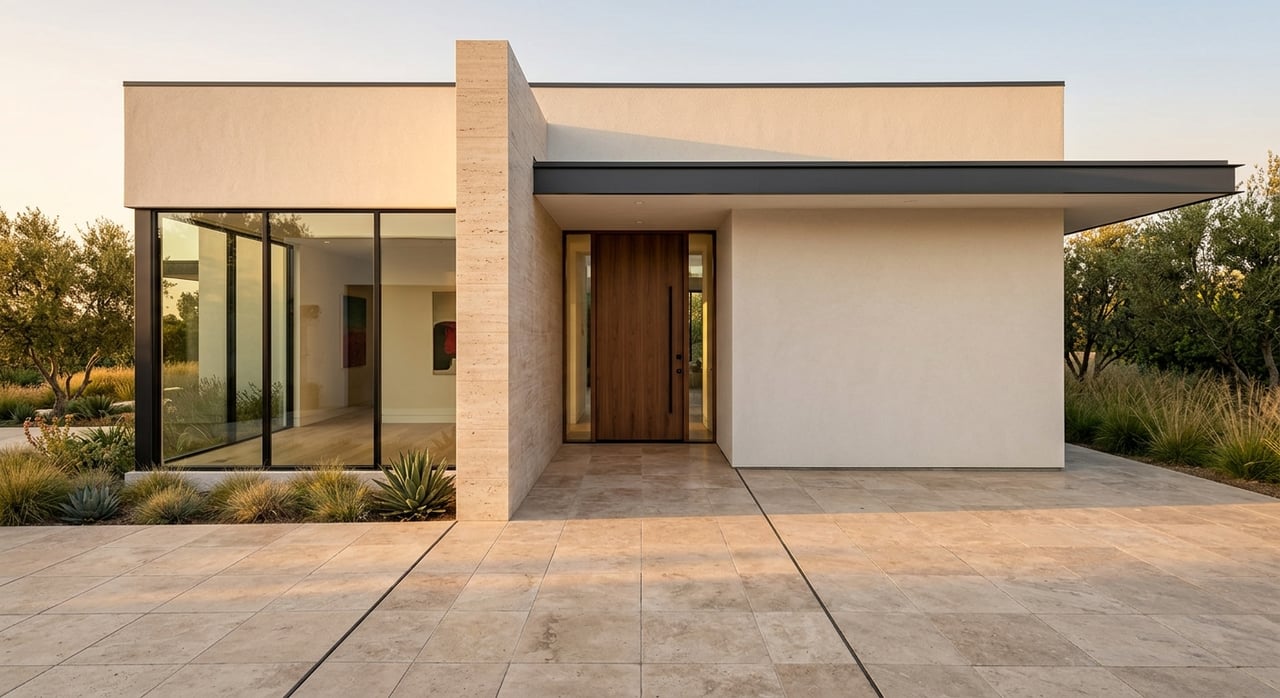
If you have ever driven through Bel Air and wondered why the neighborhood feels both timeless and constantly evolving, the answer is in the architecture. Bel Air is not defined by a single look. It is shaped by hillside lots, long views, privacy from the street, and a century of estate design that ranges from formal revival homes to glass-forward contemporary residences. If you are buying, selling, or simply studying the area, understanding these styles helps you read the neighborhood with more confidence. Let’s dive in.
Why Bel Air Architecture Feels Distinct
Bel Air developed on the southern slopes of the Santa Monica Mountains, about 18 miles west of downtown Los Angeles. According to SurveyLA, the first Bel Air allotment opened in 1922 on undeveloped hillsides with winding streets, planted trees, bridle-path easements, and a design committee meant to maintain architectural harmony.
That origin still matters today. Bel Air reads less like a conventional subdivision and more like an estate district. Larger properties often include not just the main house, but also features like guest houses, pool houses, detached garages, pools, tennis courts, and landscaped grounds.
SurveyLA also shows that Bel Air developed in layers. The prewar core leans traditional, while later periods added ranch houses, mid-century modern homes, and newer contemporary expressions. That mix is exactly what gives Bel Air its architectural depth.
Prewar Estates Set the Tone
The classic image of Bel Air often starts with its period revival estates. SurveyLA identifies American Colonial Revival, Spanish Colonial Revival, Tudor Revival, French Revival, and Mediterranean Revival as predominant historic residential styles in the area.
These homes tend to feel formal and composed. They often present a strong public face to the street, with carefully arranged façades, layered rooms, and a clear sense of arrival. In Bel Air, that traditional language helped establish the neighborhood’s reputation for elegance and architectural presence.
Many important architects contributed to this estate layer, including George Washington Smith, Wallace Neff, Paul Williams, Gordon Kaufmann, Roland E. Coate, John Byers, and James Dolena. For design-minded buyers and sellers, those names are part of the neighborhood’s lasting provenance.
Colonial Revival in Bel Air
Colonial Revival homes often read as orderly and refined. The style is associated with symmetry, prominent entrances, gabled or pedimented windows, and classical details such as pilasters or columns.
In Bel Air, this style usually feels calm and formal rather than ornate. It suggests tradition and balance, which can be especially striking on a large estate lot where the architecture is framed by mature landscaping and a long approach.
Mediterranean Revival and Indoor-Outdoor Flow
Mediterranean Revival brings a softer, more relaxed estate expression. The style is associated with stucco walls, simple massing, decorative horizontal friezes, and an overall character inspired by Italian Renaissance precedents.
In Southern California, this language works naturally with terraces, courtyards, and garden-facing rooms. That makes it especially at home in Bel Air, where hillside siting and landscaped grounds support a strong connection between architecture and outdoor living.
Tudor Revival and Old-World Character
Tudor Revival adds a more picturesque mood to the neighborhood’s traditional mix. It is often recognized by decorative half-timbering, steeply pitched gables, asymmetrical massing, and grouped windows.
Compared with Mediterranean or Colonial Revival homes, Tudor-influenced houses can feel heavier and more enclosed. In Bel Air, they often bring a more intimate and old-world character to the estate setting.
Formal Estates and Architectural Presence
A useful local example is the 1938 Shepherd Residence on Siena Way, identified by the Los Angeles Conservancy as a Bel Air home blending Neoclassical and Regency Revival styles. It helps illustrate the neighborhood’s more formal estate tradition and shows how Bel Air architecture can feel both grand and disciplined.
For sellers, this matters because homes in this category are often appreciated not just for square footage or lot size, but for proportion, detailing, and architectural authorship. For buyers, these houses often appeal when you want a home with clear structure, defined rooms, and a strong sense of permanence.
Postwar Bel Air Became More Relaxed
As Bel Air expanded in the 1950s and 1960s, the architecture broadened. SurveyLA notes that ranch-style houses make up a large portion of the postwar housing stock in the western and northern parts of Bel Air-Beverly Crest.
This period introduced a more casual way of living. Instead of emphasizing formal procession and separation between rooms, many postwar homes focused on ease, comfort, and stronger continuity between interior spaces and the outdoors.
Ranch Homes and Everyday Livability
The ranch house is typically single-story or low-slung, with low-pitched roofs, wide overhanging eaves, large windows or window walls, and open floor plans. In practical terms, that often means easier circulation and a more informal daily rhythm.
SurveyLA notes that Bel Air Highlands homes offered in 1951 included ranch variations labeled Colonial, Rustic, Provincial Farmhouse, New England, and Hawaiian bonfire. That detail is revealing because it shows how flexible the ranch form became in Bel Air. The structure was modern for its time, but the styling could still nod to traditional tastes.
For today’s buyers, ranch homes often stand out for their approachable scale and indoor-outdoor flow. For sellers, their appeal often lies in livability and the simplicity of the floor plan.
Mid-Century Modern Changed the View
Bel Air also has a substantial Mid-Century Modern presence. SurveyLA records work in the area by Frank Lloyd Wright, Jr., Craig Ellwood, Richard Neutra, Richard Dorman, and others.
What makes Bel Air’s modern homes especially interesting is how they respond to the site. SurveyLA notes that many are oriented toward the rear to take advantage of the view. From the street, they may seem understated, while the true architectural drama unfolds at the back.
Privacy in Front, Openness in Back
This is one of Bel Air’s defining design patterns. The street-facing side often prioritizes privacy, while the rear elevation opens to light, glass, terraces, and landscape.
That approach makes perfect sense in a hillside estate neighborhood. It allows a home to feel discreet on arrival and expansive once you move inside, where views and outdoor rooms become part of the architecture itself.
Key Mid-Century Features
Mid-century homes in this tradition often emphasize:
- Low profiles
- Large spans of glass
- Open-plan living areas
- Strong indoor-outdoor connections
- Site-sensitive orientation
A Los Angeles example cited in the National Register, the Schaffer House, helps illustrate this visual language with its V-shaped plan, glass walls, low-pitched asymmetrical roofs, and screening from the street. While it is not in Bel Air, it is a useful style reference for understanding why Bel Air modernism often feels private, quiet, and view-driven.
Late Modern and Contemporary Bel Air
Bel Air’s architectural story does not stop with mid-century design. SurveyLA also identifies Late Modern examples by architects such as John Lautner and A. Quincy Jones, and notes that areas like Moraga Drive include styles ranging from Cape Cod to Contemporary.
This later phase shifts the focus even more toward openness, light, and dramatic spatial sequencing. The forms often become cleaner and more minimal, while the relationship to the horizon becomes even more important.
Contemporary Glass Pavilions
Contemporary homes in Bel Air can be understood as the latest expression of long-standing neighborhood priorities. The materials and detailing may be more minimal, but the core ideas remain familiar: privacy, views, light, and indoor-outdoor living.
These homes often rely on expansive glazing, open great rooms, broad terraces, and a stronger visual connection to the landscape. In that sense, they continue a Bel Air tradition rather than breaking from it.
How to Read Bel Air’s Main Styles
If you are comparing homes in Bel Air, it helps to think less about labels alone and more about the lifestyle each style tends to support.
| Style group | Typical feel | Common strengths |
|---|---|---|
| Period revival estates | Formal, layered, composed | Defined rooms, architectural detail, strong street presence |
| Ranch homes | Casual, comfortable, easy-flowing | Simpler circulation, low-slung scale, patio connection |
| Mid-century modern | Open, view-oriented, private | Glass, rear-facing drama, indoor-outdoor living |
| Late modern/contemporary | Minimal, light-filled, expansive | Large glazing, strong sightlines, seamless outdoor integration |
This framework can make a home easier to understand during a showing. It can also help sellers position a property more thoughtfully, especially when the architecture is a central part of its appeal.
Why Style Matters in Bel Air Real Estate
In a neighborhood like Bel Air, architecture is more than a backdrop. It shapes how a home is experienced, how it is presented, and often how it is valued by design-conscious buyers.
A formal prewar estate may resonate because of authorship, symmetry, and provenance. A ranch or mid-century home may attract attention for its livability and quiet relationship to the site. A contemporary residence may stand out for its transparency, scale, and visual drama.
That is why presentation matters so much here. When a property has architectural character, the marketing should help a buyer understand not just what the home has, but how it lives and why its design belongs in Bel Air.
Bel Air’s strongest architectural narrative is clear: the neighborhood moves from old-world estate formality to postwar openness and then into contemporary transparency, all while remaining shaped by hills, privacy, and views. If you can recognize that progression, you can understand the area at a much deeper level.
Whether you are preparing to list a significant estate or searching for a home with architectural identity, a design-led perspective can make all the difference. For tailored guidance on Bel Air properties and presentation strategy, connect with Andrea Alberts.
FAQs
What architectural styles are most common in Bel Air estates?
- SurveyLA identifies American Colonial Revival, Spanish Colonial Revival, Tudor Revival, French Revival, Mediterranean Revival, Ranch, Mid-Century Modern, and later Contemporary styles across Bel Air-Beverly Crest.
What defines a traditional Bel Air estate home?
- Traditional Bel Air estate homes often feel formal and composed, with larger lots, layered floor plans, and features such as guest houses, detached garages, pools, tennis courts, and landscaped grounds.
How are Mid-Century Modern homes in Bel Air typically designed?
- Many Bel Air mid-century homes are oriented toward the rear to capture views, with more restrained street-facing façades and more expansive use of glass and outdoor connection at the back.
Why do ranch homes matter in Bel Air architecture?
- Ranch homes represent an important postwar layer in Bel Air and are known for low-slung forms, open floor plans, large windows, and a more casual indoor-outdoor lifestyle.
How do contemporary Bel Air homes relate to older styles?
- Contemporary Bel Air homes often continue the neighborhood’s long-standing focus on privacy, natural light, view orientation, and seamless indoor-outdoor living, even though their forms are more minimal.
Why is architectural style important when buying or selling in Bel Air?
- In Bel Air, style helps shape buyer perception, presentation strategy, and how a home’s design story is understood within the neighborhood’s broader estate context.