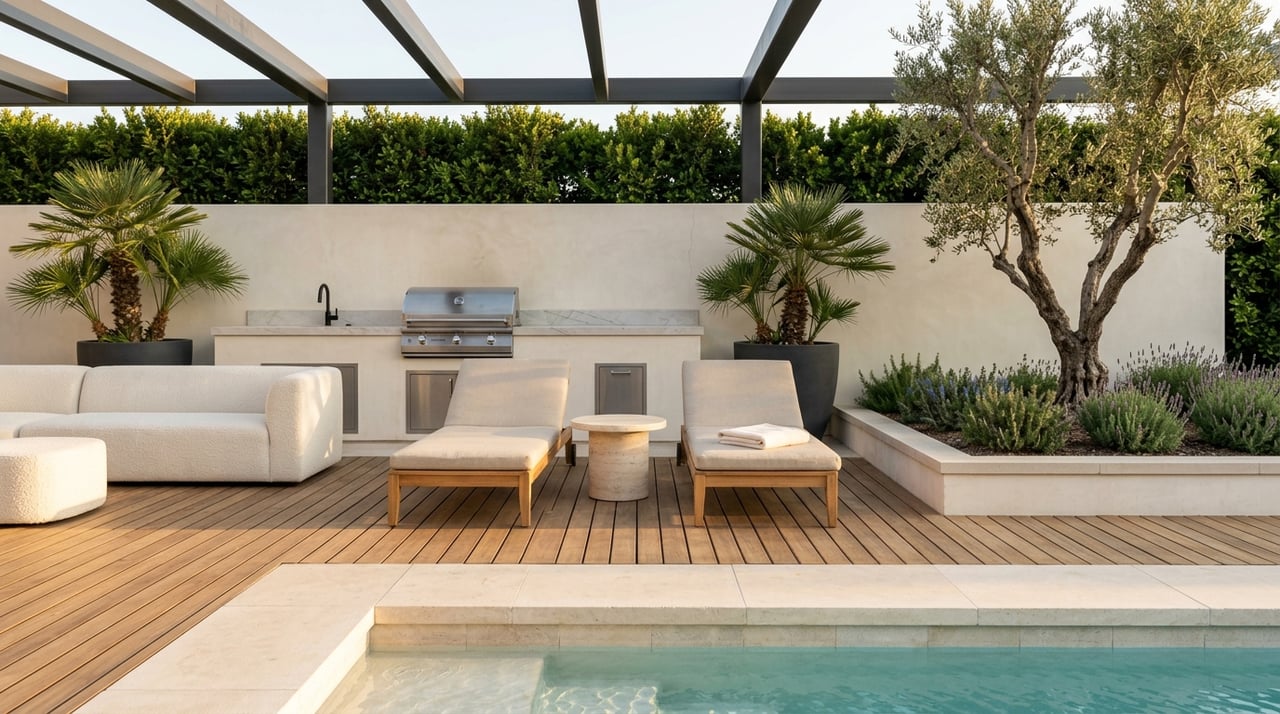
What makes an outdoor space in Bel Air feel truly resort-like? It is rarely just a pool or a beautiful view. The best spaces feel composed, comfortable, and effortless to live in, even on a challenging hillside lot. If you are updating a home for your own enjoyment or thinking about future resale, the right design choices can turn an exterior into one of the property’s strongest assets. Let’s dive in.
Why resort-style works in Bel Air
Bel Air’s climate naturally supports outdoor living for much of the year. Nearby NOAA climate normals for Los Angeles show long dry summers, mild wet winters, and about 14.25 inches of annual precipitation, with June through September essentially dry and average highs reaching 82.0°F in July and 84.0°F in August.
That pattern shapes what works best. A polished outdoor environment in Bel Air usually depends less on large lawns and more on shade, low-water planting, efficient irrigation, and drainage that can handle winter rain. In design terms, that creates a look that feels more refined and more aligned with the landscape.
For many properties, especially hillside estates, the outdoor plan should read as an extension of the architecture. Instead of treating the backyard as one open area, the most successful homes create a sequence of spaces with a clear purpose and flow.
Build outdoor rooms, not one backyard
In Bel Air, a resort-like layout often begins with zoning. Think in terms of an arrival court, a dining terrace, a pool deck, a garden path, and a quieter place to sit near a view edge. Each area should feel connected, but each should also have its own role.
This approach makes a property more usable day to day. Dining works best close to the kitchen, lounge seating belongs near the pool or spa, and a separate overlook or fire-adjacent seating area gives the landscape depth and rhythm.
On sloped lots, terraces and graded platforms are often more practical than forcing a single flat yard. They can make the site feel intentional and elegant while responding to the land as it exists. That matters in Bel Air, where the strongest landscapes feel designed with the hillside, not against it.
Terraces can add function and drama
Multi-level terraces, broad steps, and planted breaks can create a private-resort feeling while improving circulation. They also help break down a large property into comfortable, human-scale moments.
From a visual standpoint, terracing gives the eye places to pause. From a practical standpoint, it can make entertaining, lounging, and moving through the landscape much easier.
Prioritize shade and comfort
A resort atmosphere depends on comfort as much as beauty. Because Bel Air summers are warm and dry, shade should be treated as essential infrastructure, not an accessory.
A well-designed outdoor plan often layers sun and shade so you can use the space throughout the day. Covered dining terraces, canopy trees where appropriate, and shaded lounge areas can make the landscape feel much more livable.
This is also where presentation matters. A resort-like space should photograph beautifully, but it should also work in real life. Buyers and homeowners alike respond to spaces that look polished without feeling exposed or difficult to maintain.
Choose low-water planting with structure
Low-water landscaping is one of the smartest design moves in Los Angeles. LADWP’s California Friendly guidance notes that low-water plants can handle hot, dry summers and mild, wet winters, and Mediterranean-style planting can still feel layered, colorful, and lush.
In Bel Air, that often translates to restrained palettes with texture and structure. Think clipped hedges, sculptural planting, layered greenery, and mature canopy where possible, rather than oversized lawns that demand heavy irrigation.
Los Angeles also requires water-efficiency measures for applicable new construction, additions, and alterations through its Citywide Water Efficiency Standards Ordinance. City code also calls for water-management features on required landscape projects, minimum specifications for potable-water irrigation systems, and encourages mulch at a depth of at least three inches.
Turf can be replaced thoughtfully
If you are renovating an older landscape, lawn reduction may be worth considering. LADWP currently promotes turf replacement with rebates of up to $5 per square foot and offers design resources, classes, and low-water plant lists.
For resale, the key is execution. A lawn-to-landscape conversion should feel tailored and architectural, not sparse. When done well, it can signal both visual sophistication and lower ongoing water use.
Design privacy without heaviness
Privacy is central to the Bel Air lifestyle, but it should be designed with restraint. A resort-like property usually feels sheltered without feeling closed in.
That balance often comes from layered screens, hedges, and planting masses that define space without overwhelming it. The goal is to create calm and enclosure while preserving light, views, and clean sightlines.
There is also a practical layer to this. UC ANR notes that fire-smart landscaping is more about spacing, maintenance, and irrigation than a simple list of acceptable or unacceptable plants. In other words, privacy design should also support long-term maintenance and site safety.
Respect mature and protected trees
Mature trees can add instant gravitas to a property. They contribute shade, visual maturity, and a sense that the landscape belongs to the site.
That said, Los Angeles protects certain trees and shrubs, including coast live oak, black walnut, western sycamore, California bay, Mexican elderberry, and toyon. Removal or damage to protected vegetation is regulated, so any outdoor redesign should begin by understanding what is already on the property.
For both buyers and sellers, this is an important point. The most successful plans are often built around specimen trees rather than assuming they can be removed later.
Integrate pools and spas early
In Bel Air, a pool remains one of the clearest markers of a luxury outdoor space. But the best results happen when the pool or spa is integrated into the overall plan from the start.
That means considering how the water element relates to seating, circulation, dining, privacy, and views. A pool should anchor the outdoor experience, not feel like a separate object dropped into the yard.
Code matters here as well. Los Angeles requires residential swimming pools to be completely enclosed, and the barrier must be at least 60 inches high on the side facing away from the pool. LADBS also accepts pool and spa permits through ePlanLA, which makes early coordination important.
Safety and design should work together
In high-end outdoor design, safety features should not feel like afterthoughts. Barriers, gates, and layout decisions should be resolved as part of the design language so the finished space feels seamless.
That is especially important before listing a property. Buyers tend to respond better when a pool area looks complete, compliant, and easy to understand.
Take fire and hillside conditions seriously
Bel Air landscapes need to do more than look beautiful. On many lots, they also need to respond to hillside conditions, drainage, and fire-clearance requirements.
Where a property falls within the City of Los Angeles brush-clearance area, LAFD requires year-round compliance within 200 feet of structures in the Very High Fire Hazard Severity Zone. Requirements include cutting grass to three inches and keeping roof surfaces free of combustible debris. The same rules apply within 10 feet of combustible fences or travel surfaces.
This is one reason luxury landscapes in Bel Air often use separated plant masses, low-fuel groundcovers, and easier-to-maintain transitions near the house. CAL FIRE and UC ANR also emphasize defensible space, home hardening, and ignition-resistant materials.
Drainage and grading can shape the budget
On sloped sites, outdoor upgrades can quickly move beyond decorative improvements. Retaining walls, grading, drainage changes, and pool excavation may trigger permit and engineering review.
LADBS’ ePlanLA includes permits for swimming pools and spas, fences and block walls, and grading. The Bureau of Engineering also notes that permits can be required for retaining walls, grading, and drainage-related work in city-controlled areas.
That does not mean ambitious outdoor projects are not worth doing. It simply means the smartest plans account for civil and permitting realities from the beginning.
What adds resale value
From a resale perspective, the most durable outdoor improvements tend to be the most usable. Buyers are often drawn to spaces that feel luxurious but also manageable.
That usually includes:
- Usable terraces and clear circulation
- Comfortable shade
- Privacy that still feels open and elegant
- Low-water planting and efficient irrigation
- Mature trees and visual maturity
- A pool or spa that appears well integrated and code-compliant
- Drainage and hillside work that does not raise obvious questions
These features also tend to present well in photography, which matters in Bel Air. Strong outdoor design helps a property read as complete, intentional, and easier to enjoy from day one.
Common mistakes to avoid
Even beautiful homes can lose momentum if the landscape feels high-friction. In Bel Air, the most common issues are often practical rather than aesthetic.
Watch for these pitfalls:
- Oversized lawns with high water demand
- Dense planting tight against the house
- Unpermitted pool, retaining wall, or grading work
- Poor slope drainage
- Landscape design that ignores brush clearance
- Assumptions that mature or protected trees can be removed later
If you are buying, these are worth reviewing before you treat an outdoor space as turnkey. If you are selling, resolving them early can make the home feel far more compelling.
A smart checklist before you buy or renovate
If a Bel Air property has a dramatic outdoor setup, ask a few practical questions before moving forward. They can save time, cost, and uncertainty later.
Start with this short checklist:
- Were the pool, spa, retaining walls, and grading work properly permitted?
- How is drainage handled on the site, especially in winter rain?
- What irrigation controls and water-efficiency features are in place?
- Are there any protected trees or regulated shrubs on the property?
- Is the parcel subject to brush-clearance requirements, and is there a compliance history?
A resort-like outdoor space should feel easy, not complicated. The more clarity you have on these details, the more confidently you can evaluate the property.
If you are preparing a Bel Air home for sale or searching for one with standout outdoor design, thoughtful guidance can make all the difference. For tailored advice on presentation, value, and what resonates with design-conscious buyers on the Westside, connect with Andrea Alberts.
FAQs
What defines a resort-like outdoor space in Bel Air?
- A resort-like outdoor space in Bel Air usually combines distinct living zones, comfortable shade, low-water landscaping, privacy, and features such as a pool or spa that are integrated into the overall design.
Why is low-water landscaping important for Bel Air homes?
- Low-water landscaping fits Bel Air’s dry-summer, mild-winter climate and aligns with Los Angeles water-efficiency standards, while also helping reduce maintenance and irrigation demands.
Do Bel Air pool projects require special planning?
- Yes. In Los Angeles, residential pools must be completely enclosed, required barriers must meet code, and permits for pools and spas can be filed through LADBS ePlanLA.
What should buyers ask about a Bel Air outdoor space?
- Buyers should ask about permits, drainage, irrigation controls, protected trees, and any brush-clearance requirements or compliance history tied to the property.
How do hillside conditions affect outdoor design in Bel Air?
- Hillside lots often benefit from terraces and graded platforms, but retaining walls, grading, drainage changes, and pool excavation may require permits and engineering review.
Can mature trees affect a Bel Air landscape renovation?
- Yes. Los Angeles protects certain trees and shrubs, so a landscape plan should account for existing regulated vegetation before removal or major site work is assumed.