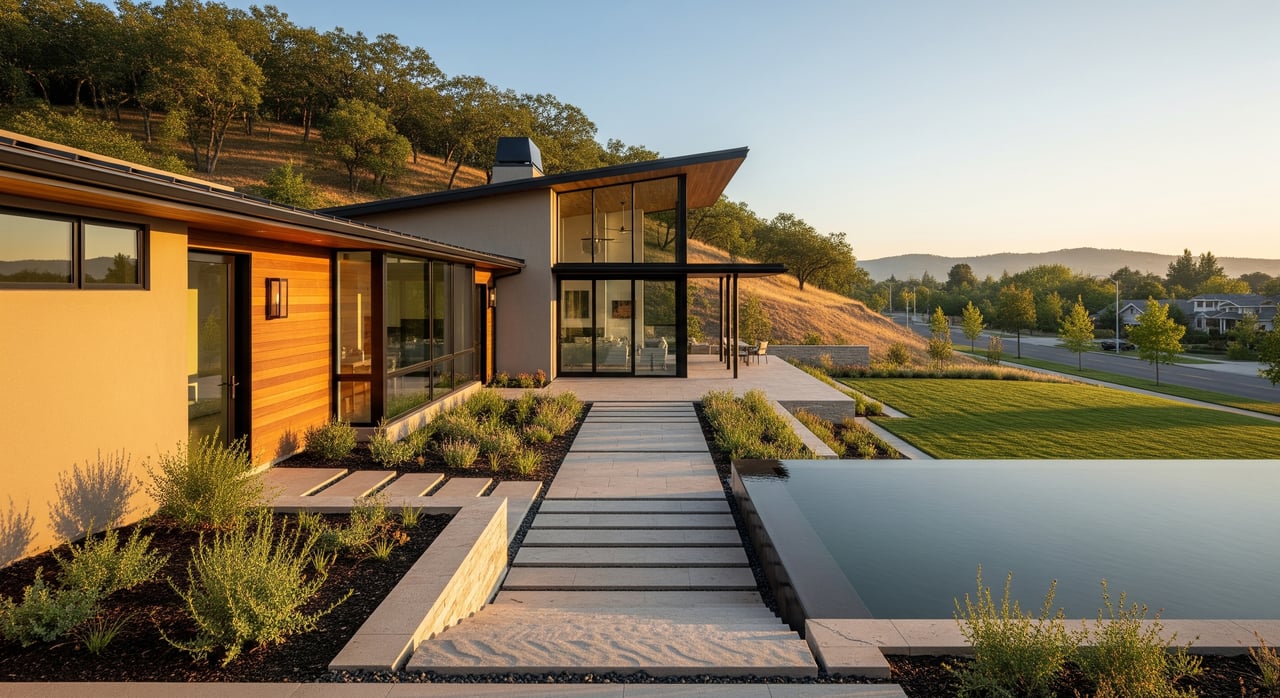
Do you picture morning coffee over a tree-lined vista or weekend games on a wide, level lawn? In Brentwood, Sacramento, your setting shapes daily life as much as the floor plan. Choosing between a hillside or canyon-edge lot and a flat neighborhood parcel is not only a design decision. It also affects permits, maintenance, access, and long-term comfort. In this guide, you’ll learn how to read the land, what to expect from each setting, and how to align the site with your lifestyle and plans. Let’s dive in.
What “canyon” and “flat” mean here
In Brentwood, the terms describe how the home sits on the land.
- Canyon or hillside lots are on steeper ground, near escarpments or creek corridors, and often offer privacy and potential views.
- Flat or neighborhood lots sit on level streets with conventional access, larger contiguous yards, and simpler maintenance.
To confirm a specific property’s slope and setting, review contours and parcel data on the Sacramento County Parcel Viewer, then cross-check with USGS TopoView maps. Those tools help you see elevation changes, nearby riparian corridors, and whether a lot is truly level.
Site and build realities
Slope and foundations
On hillside sites, you often see stepped foundations, drilled piers, or split-level floor plates that follow the terrain. Retaining walls and engineered drainage are common. These are proven solutions, yet they add design and permitting complexity.
Flat lots typically support slab-on-grade foundations, garages at street level, and straightforward grading. If you plan future additions or an accessory unit, a level site generally offers more flexibility.
Key takeaway: The steeper the site, the more engineering and review you should expect.
Soil and geotechnical considerations
The Sacramento region includes alluvial soils and areas of artificial fill. A geotechnical report is a smart move for both hillside and flat parcels. On slopes, your engineer will also evaluate shallow or deep-seated stability and how proposed grading could change water flow. On flats, the focus is often settlement potential and trench backfill performance.
Drainage and stormwater
Slope carries water quickly, so uphill and downhill drainage paths must be designed and maintained. Swales, perimeter drains, and erosion-control measures matter on day one. Level parcels can experience ponding in low spots or near creeks and levees. Before you buy, check the FEMA Flood Map Service Center to see if flood insurance or an elevation certificate could apply.
Access, circulation, and parking
Steep driveways, switchbacks, or tight turnouts can complicate daily life and guest parking. Delivery vehicles and emergency access should be part of your evaluation. Flat streets usually allow simple in-and-out circulation and more generous apron parking.
Utilities and services
Routing utilities is typically simpler on flat parcels. On hillsides, you may encounter pump systems for sewer, longer service runs, or easements that control where lines can go. For electrical planning or solar readiness questions, consult the Sacramento Municipal Utility District (SMUD) early in your process.
Architecture and landscape cues
Hillside homes
- Multi-level or split-level designs with stepped floor plates
- Large windows oriented to views, lower-profile rooflines
- Cantilevered decks, view terraces, integrated stairs and pathways
- Stone or concrete retaining elements and corrosion-resistant fasteners
- Terraced planting beds with deep-rooted natives and erosion-control groundcovers
Flat-lot homes
- Simple massing, single or two-story plans with street-facing entries
- Larger contiguous rear yards that suit play areas or future ADUs
- Full-size patios, lawns, and pools with efficient circulation
- Conventional materials, with flexibility for outdoor kitchens and sport courts
Hazards and risk in Brentwood
Wildfire exposure
Lots near brush or on slopes can face higher fire exposure. Defensible space, ember-resistant details, and fire-adapted landscaping are important. Check your address on the CalFire Fire Hazard Severity Zone map and follow local vegetation management guidance.
Flood and levee considerations
In low-lying sections or near creek corridors, some flat parcels may fall within mapped flood zones. Confirm your status on the FEMA Flood Map Service Center and ask your insurance professional about requirements.
Erosion and seismic
Grading on hillsides increases erosion risk, which is why permits and inspections are common for retaining walls and slopes. Sacramento’s alluvial basin also includes zones where liquefaction is a consideration. Your geotechnical engineer will advise on appropriate foundation types and compaction standards.
Permits and rules to know
Start by identifying which agency has jurisdiction. Some Brentwood addresses may be under Sacramento County, while others sit within City of Sacramento boundaries.
- For county permits, grading, and retaining wall standards, visit Sacramento County Building Permits and Inspections.
- For city addresses, check City of Sacramento Community Development.
- Construction must follow the California Building Code and local amendments. Explore state-level standards at the California Building Standards Commission.
Depending on the site, you may also encounter erosion control plan requirements, stormwater measures, tree protections, and riparian setbacks. In planned subdivisions with HOAs, expect design guidelines for heights, colors, fencing, and landscaping.
Lifestyle tradeoffs you will feel
- Privacy and views vs day-to-day ease: Hillsides tend to feel more secluded and offer potential vistas, yet they can add maintenance and access steps. Flats deliver simple routines, direct street access, and easy hosting.
- Usable outdoor space: Slopes favor layered terraces and intimate seating areas. Flat yards support full-size lawns, pools, and multi-sport zones with less engineering.
- Energy and microclimate: Orientation matters. A hillside that captures breezes and shade can feel cooler in summer, while a shaded canyon may be cooler in winter.
- Future plans: If you foresee an ADU, studio, or cabana, a level lot usually simplifies permitting and utility routing.
- Resale: Market response depends on condition, design, and demand. The best move is to align the site with your lifestyle and maintain it well.
Quick buyer checklist
Use this to organize your due diligence.
- Site and legal
- What is the lot’s slope and orientation?
- Are there easements, deed restrictions, or HOA covenants?
- Is the property in a mapped FEMA flood zone or on a levee-protected parcel?
- Are there riparian setbacks or tree protections?
- Engineering and safety
- Is there a recent geotechnical report? Any known slope stability issues?
- Are there retaining walls? Are there permits and inspection records?
- Any history of erosion, slides, or settlement?
- Services and access
- Is the property on public sewer or septic? If septic, when was it last inspected?
- How are electric, gas, and water provided? Any pump stations or long service runs?
- What does emergency access look like during heavy rain or wildfire conditions?
- Permitting and construction
- Would your planned alterations trigger grading permits or engineer-stamped plans?
- Are there erosion-control or tree removal permit requirements?
- Living and maintenance
- What are typical maintenance tasks and costs for the landscape type?
- What vegetation management is required for defensible space?
- Inspections to order in escrow
- Full home, geotechnical, foundation/structural, pest, and sewer or septic inspections as applicable
How to move forward with confidence
- Map the land: Use the Sacramento County Parcel Viewer and USGS TopoView to understand slope, creeks, and contours.
- Check hazards: Confirm flood status on FEMA’s Flood Map Service Center and wildfire designation with CalFire’s FHSZ map.
- Confirm codes and permits: Start with Sacramento County Building Permits and Inspections or the City of Sacramento Community Development portal, then reference the California Building Standards Commission for statewide standards.
- Think landscape early: On slopes, lean on deep-rooted natives and erosion-control groundcovers. The California Native Plant Society plant lists are a helpful starting point.
When you match the setting to how you live, the home works harder for you. If you want a calm, design-led conversation about hillside versus flat lots in Brentwood, Sacramento, reach out to Unknown Company to discuss your plans and timeline.
FAQs
How do I tell if a Brentwood lot is considered hillside?
- Review contours on the Sacramento County Parcel Viewer and confirm elevation changes with USGS TopoView maps.
What permits are typical for building on a slope in Sacramento County?
- Expect grading permits, engineered retaining wall plans, and standard building permits through Sacramento County Building Permits and Inspections.
Do flat Brentwood lots near creeks require flood insurance?
- Check the address on the FEMA Flood Map Service Center and consult your insurance professional on requirements.
Are hillside homes in Brentwood at higher wildfire risk?
- Lots near brush or open space can face higher exposure; verify your designation on the CalFire Fire Hazard Severity Zone map.
Who provides electricity planning help for solar and service upgrades?
- Contact the Sacramento Municipal Utility District (SMUD) for service availability, upgrades, and general planning guidance.
What landscape approach works best for slope stabilization?
- Use deep-rooted native species and erosion-control plantings, guided by the California Native Plant Society plant lists.