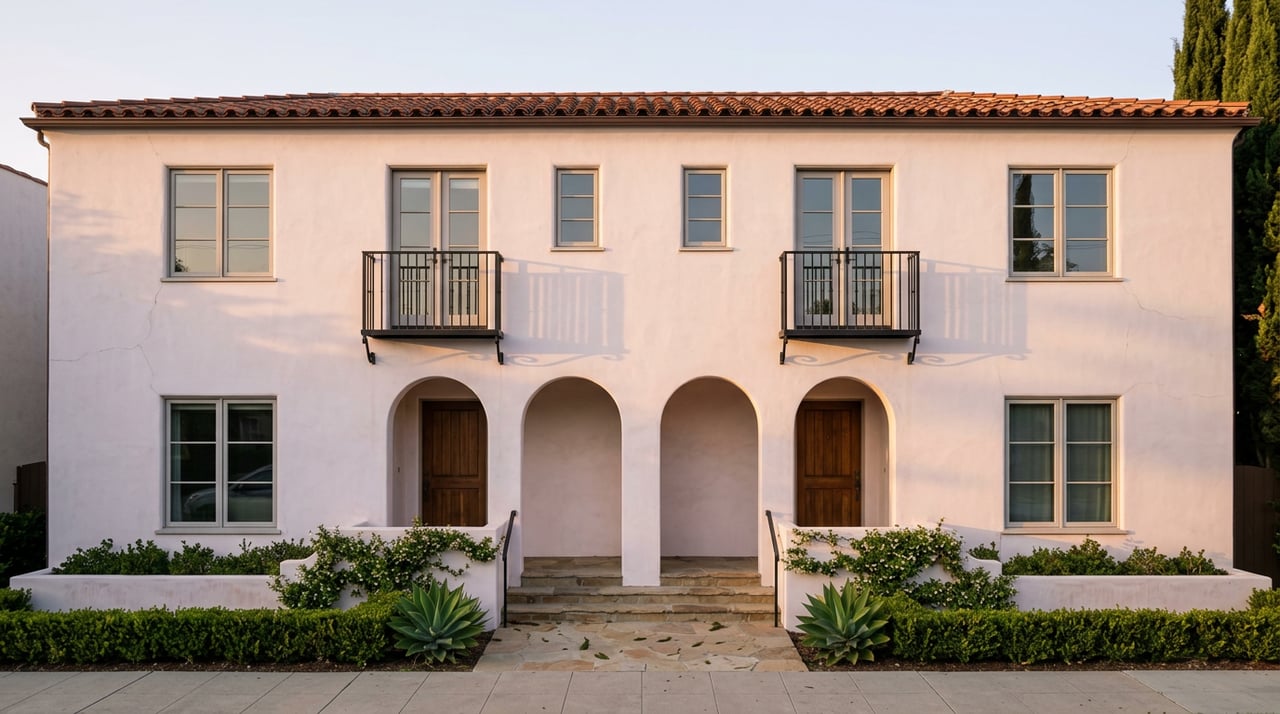
Picture two small multifamily buildings on the same West Hollywood block. Same era, same stucco exterior, same rent roll on paper. One is a duplex. The other has three units. A buyer who wants to eventually live in the property will find that single fact, not the rent roll, decides how the purchase actually plays out.
That is the part of West Hollywood's Rent Stabilization Ordinance that catches out-of-town buyers off guard. Most people walk into a small multifamily purchase here assuming the rent cap is the whole story. It isn't. The ordinance's occupancy rules treat a duplex differently than anything with three units or more, and that difference changes what you can actually do with the building after you close.
What the Ordinance Actually Covers
West Hollywood adopted its Rent Stabilization Ordinance in 1985, and the coverage test still runs on a single date: a certificate of occupancy issued before July 1, 1979. If a multifamily building on your list clears plan check after that date, it generally sits outside the ordinance's rent-cap provisions. If it was standing and rented before then, assume it's covered until a title search or a call to the city's Rent Stabilization Division proves otherwise.
Coverage extends further than most buyers expect. Certain single-family homes and condominiums fall under the ordinance too, if the current tenancy began before January 1, 1996. Anything built and occupied after that window, or exempted through the city's application process, typically falls to California's statewide Tenant Protection Act instead, which caps increases at 5 percent plus local CPI, up to 10 percent total, and requires just cause for eviction after twelve months of tenancy.
None of this shows up on a listing sheet. It shows up in escrow, when your title company or attorney pulls the certificate of occupancy date and your underwriting assumptions either hold or don't.
The Cap Everyone Already Prices In
The rent cap itself is the part buyers do their homework on, and for good reason. The Annual General Adjustment, the yearly ceiling on how much a covered unit's rent can rise, runs at 75 percent of the local CPI by formula. For the period running September 1, 2025 through August 31, 2026, the city set that adjustment at 2.25 percent, below the standard 3 percent cap. It resets every spring, and it is the number most pro formas already build in.
The number that gets missed sits one line below it: registration. Every covered unit has to be registered annually with the city, and recent 2026 guidance on the fee has varied by source, with figures ranging from roughly $144 to $234 per unit depending on which schedule you're reading. Confirm the current fee directly with the Rent Stabilization Division before you close, because the number itself matters less than what happens if a seller skipped it.
A landlord who fails to register a unit cannot lawfully impose a rent increase until the registration is cured. Curing it doesn't reach backward. A missed year of registration is a permanent loss of that year's allowable increase, not a deferred one. If you're buying a building where the seller's registration history has gaps, you're not just inheriting a compliance fix. You're inheriting a rent roll that's permanently lower than it would have been if the paperwork had been filed on time.
The Duplex Carve-Out
Here is the mechanism that actually separates a duplex from everything larger than it.
West Hollywood's ordinance allows an owner move-in eviction, meaning a landlord can end a tenancy to occupy the unit as a principal residence, but only under specific conditions: the owner must hold at least 50 percent interest in the property, must intend to occupy for at least 36 months, must give 60 days' written notice, and cannot displace a tenant who is 62 or older, disabled, or certified terminally ill if another unit in the building is available.
For most small multifamily buildings, the ordinance also limits the whole exercise to one owner or relative move-in per building in a six-year period. Buy a triplex or fourplex with the intent of eventually occupying one unit, and that six-year ceiling applies to the building as a whole, regardless of how many owners are on title.
Duplexes are exempt from that ceiling. If two people purchase a duplex and each holds a genuine 50 percent interest, each of them can independently exercise an owner move-in eviction for their own unit. Two owners, two separate move-in rights, in the same building, without the six-year restriction that would apply to a larger property.
| Duplex (two 50% owners) | Triplex / Fourplex | |
|---|---|---|
| Move-in evictions per building | One per owner, no shared six-year cap | One total, per six-year period |
| Minimum ownership to qualify | 50% interest, held individually | 50% interest, held individually |
| Notice required | 60 days | 60 days |
| Protected tenants (62+, disabled, terminally ill) | Cannot displace if another unit is available | Cannot displace if another unit is available |
That distinction is worth running the numbers on before you write an offer, not after. A co-purchase structured around two 50 percent owners on a duplex gives both buyers a real, individually exercisable occupancy path. The identical structure on a three-unit building gives the ownership group exactly one shot at it, shared.
The Exit Nobody Budgets For
The other friction point shows up for buyers thinking further ahead, toward redevelopment or a full exit from the rental business entirely. State law, through the Ellis Act, preempts any city from blocking a landlord's right to withdraw a building from the rental market outright. West Hollywood layers its own notice and relocation requirements on top of that right, and the restriction that matters most for a buyer is what happens after the withdrawal.
Once a building is pulled from the rental market under the Ellis Act in West Hollywood, it cannot return to residential rental use for ten years, and even then, tenants displaced by the withdrawal generally hold a right of first refusal on those units. If your investment plan for a small multifamily building depends on withdrawing it, redeveloping the lot, or otherwise clearing the rent roll and coming back to lease it up again within a normal hold period, the ten-year clock is the number that makes or breaks the pro forma, not the cap rate.
Before You Write the Offer
The confirmations worth making at diligence, in order:
- Certificate of occupancy date, to establish whether the RSO applies at all
- Current registration status for every unit, and whether any year was missed
- Existing tenancies, and whether any tenant qualifies for the 62-plus, disability, or terminal illness protections against move-in eviction
- Whether the building is a duplex or larger, if occupancy by an owner is part of the plan
- Whether an Ellis Act withdrawal has ever been filed on the property, which would trigger the ten-year restriction independent of who owns it now
None of this replaces a conversation with a real estate attorney who handles West Hollywood rent-stabilized transactions specifically. The ordinance updates its adjustment rate every year and its registration schedule periodically, and the analysis above reflects the rules in effect for the 2025-2026 cycle.
A Few Questions Worth Asking Directly
Does the ordinance apply to condos I'm buying to live in myself? Generally no, if you're an owner-occupant buying a condo with no existing tenant. Coverage for condos applies mainly where a tenancy predates January 1, 1996, which is uncommon in condo purchases but worth ruling out during diligence.
What if the building was constructed after 1979? It typically falls outside the local RSO and instead under the state's Tenant Protection Act, which has its own, less restrictive rent cap and just-cause framework.
Can I raise rent to market rate once a covered unit turns over? For most tenancies that began in 1999 or later, yes. Vacancy decontrol generally allows the landlord to set a new rent at whatever the market will bear once a tenant vacates voluntarily, though the ordinance restores the prior tenant's rent ceiling in cases involving certain no-fault terminations.
The full text of the ordinance is published by the City of West Hollywood's Rent Stabilization Division, and the municipal code itself, Title 17, is available through the city's published code.
Small multifamily buying in West Hollywood rewards the buyer who reads the deed as closely as the rent roll. If you're weighing a duplex, triplex, or income property here and want a second read on what the ownership structure actually allows before you write an offer, Andrea Alberts can walk the specifics with you.