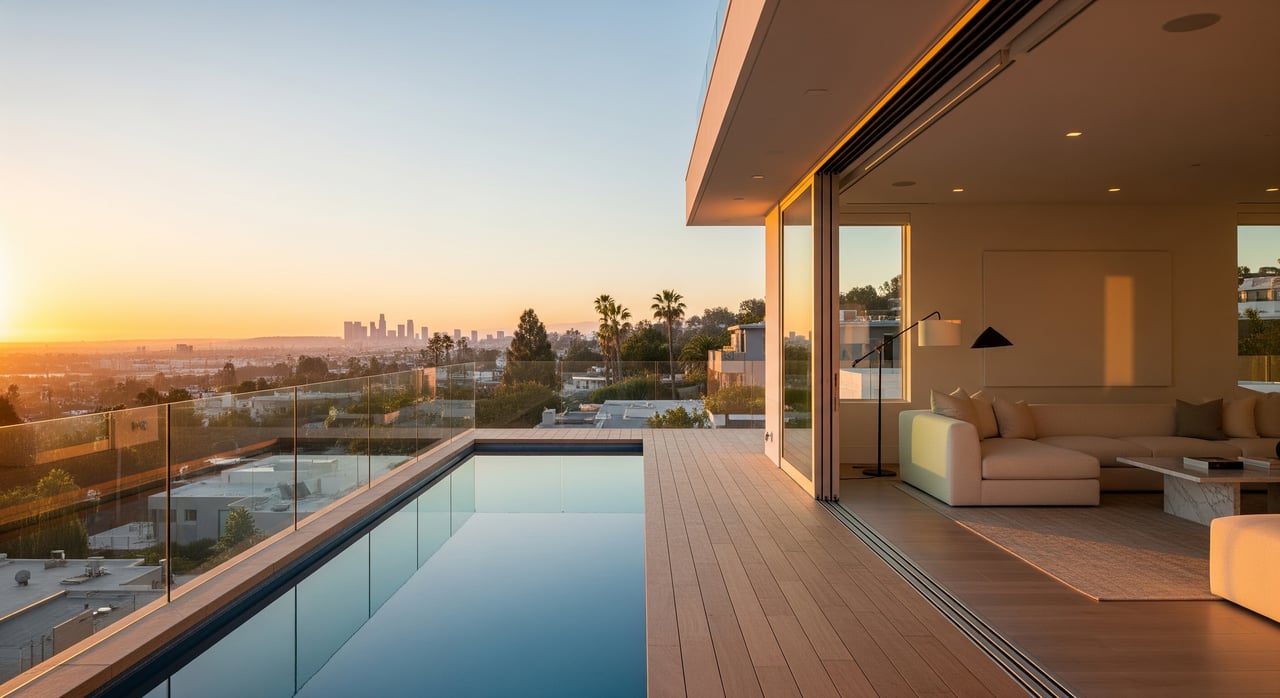
Are your listing photos making West Hollywood buyers stop and click, or scroll past? In a design-forward market like WeHo, images are your first showing. You want photography that feels editorial, tells a clear story, and highlights the lifestyle your home delivers. In this guide, you’ll learn how to plan hero shots, sequence images, style for the camera, and schedule day-to-dusk moments that spark emotion and showings. Let’s dive in.
Why presentation matters in West Hollywood
West Hollywood buyers are visually driven. Many work in design, entertainment, and creative fields, and they expect listings to reflect that sensibility. Strong, professional images shape first impressions online, influence click-through, and determine which homes make the tour list.
Local housing stock rewards great photography. From mid-century lines and polished contemporary renovations to boutique condos with rooftop decks, there is real drama to capture. Skyline and canyon views, floor-to-ceiling glass, custom millwork, pools, and curated landscaping all photograph beautifully when planned well.
In a competitive WeHo landscape, buyers often expect editorial-caliber presentation. Listings with poor or generic photos risk appearing lower tier, even when finishes are high end. Staged and professionally photographed homes commonly attract more showings and stronger first offers because clear, attractive visuals reduce uncertainty about condition and scale.
Build a visual story that sells
Start with a hero image
Open with the single most compelling image your property can offer. That might be a living room framing a city view, a crisply lit kitchen with custom cabinetry, or a striking exterior with sculptural lines. Your cover photo should be emotional and legible in thumbnail formats. Keep the first 6 to 8 images very strong, since most buyers decide to click based on those.
West Hollywood-ready sequencing
Create a clean narrative from arrival to lifestyle highlights:
- Exterior or streetscape arrival
- Entry and orientation to main spaces
- Primary living spaces
- Kitchen then dining flow
- Primary suite and bathrooms
- Secondary bedrooms or office
- Outdoor spaces, terraces, rooftop, or yard
- Specialty features like a pool, gym, media room, or wine storage
- Condo amenities and parking where relevant
- Neighborhood lifestyle moments
- Floor plan and a single twilight or drone shot as supplements
This order mirrors how a buyer experiences the property and keeps energy building toward special features.
What to prioritize by property type
- Small, design-forward condo: Emphasize light, layout clarity, views, and amenities. Fewer, stronger images can work very well.
- Luxury townhouse or house: Use more images to show spatial progression, multiple outdoor rooms, material detail, and lifestyle vignettes.
- Investment or compact unit: Keep it concise and bright. Focus on functionality and clear scale.
Your essential shot list
Use this as a baseline and adjust to your property’s strengths.
- Cover hero image: best living space, exterior facade, or view
- Exterior approach and building entry or courtyard
- Entry or foyer: show connection to main spaces
- Living room: one wide, one detail vignette
- Kitchen: wide plus a feature shot of the island, range, or custom cabinetry
- Dining area: show flow to kitchen and living
- Primary bedroom: wide plus a detail of windows or closets
- Primary bathroom: vanity, shower, or soaking tub feature
- Secondary bedrooms or office: staged and functional
- Outdoor living: balcony, patio, yard, rooftop. Capture day views and evening ambience if relevant.
- Specialty rooms: media room, gym, wine storage, integrated tech
- Condo amenities: lobby, pool, gym, roof deck, and parking access
- Neighborhood lifestyle: streetscape, nearby cafe or park cues
- Floor plan: simple schematic to reinforce layout
- Twilight image: facade or balcony view with city lights
- Drone or overhead: only when it adds real context to location or amenities
Style and staging that photograph beautifully
Editorial minimalism principles
Aim for selective furnishings and curated props. Use a neutral base with a few bold accents that read well on camera. Highlight the material palette you want buyers to notice by echoing wood tones, stone, and metal finishes through textiles and lighting. Size furniture to the room so scale feels right. Small lifestyle vignettes, like a pared-back table setting or a tray on the island, help buyers imagine living there without clutter.
A quick before-and-after workflow
- Pre-shoot prep, 2 to 7 days out:
- Deep clean and declutter. Clear surfaces and store personal items.
- Tackle small repairs and touch-ups, including grout and hardware.
- Light staging with a few key pieces and one strong artwork.
- Match bulb color temperatures and replace any burnt bulbs.
- Open or sheer window treatments to show light and views.
- Day of shoot:
- Final passes on pillows, throws, mirrors, and glass.
- Remove trash cans, hoses, cords, and pet items.
- Add fresh greens or flowers where they support the shot.
- After the shoot:
- Consider virtual staging for empty rooms if needed, and disclose its use per MLS rules.
Styling for WeHo aesthetics
- Mid-century modern: sculptural furniture, geometric rug, walnut and brass accents.
- California casual: light linens, natural woods, healthy plants, soft neutrals.
- Glam LA: polished metallics, rich textures, statement lighting, curated art.
- Minimal modern condo: monochrome palette and sparse furniture to emphasize openness and views.
Small upgrades with big impact
- Decluttering and professional cleaning
- Window washing and mirror polishing
- Touch-up paint in neutral shades
- Updated light fixtures or consistent bulb temperatures
- Renting 2 to 4 key furniture pieces for the living room and primary suite
Day to dusk strategy
When to shoot interiors
Daytime interiors are ideal for showing clarity, finishes, and true color. Schedule to maximize natural light based on your orientation. Midday often works well for even exposure, but your photographer will tailor timing to each room’s light.
Why add a twilight image
A single twilight image can add emotional resonance and emphasize lighting design, a pool glow, or city lights from a balcony. The typical approach is to photograph interiors and exteriors during the day, then return about 20 to 30 minutes after sunset for a blue-hour exterior or terrace view. Expect a separate add-on for twilight given the timing and setup.
File quality, covers, and details
Start with high-resolution files because listing portals compress uploads. Know how platforms crop cover images so your hero photo reads well in thumbnails. For premium listings, include at least one close-up material detail and a floor plan to reinforce quality and layout clarity.
Drone, amenities, and compliance
Use drone photography only when it adds meaningful context, such as proximity to key corridors, a roof deck, or site orientation. Commercial flights must comply with FAA Part 107 rules and any local ordinances. For condos, obtain HOA or management permission to photograph common areas and to access rooftops for safe launching.
Logistics, privacy, and HOA checks
HOA and common areas
Many West Hollywood condos and boutique buildings have rules for photographing common spaces and bringing third-party vendors on site. Confirm permissions in advance, understand any insurance requirements, and coordinate schedules to avoid last-minute delays.
Privacy and disclosures
Avoid photographing neighbors’ private spaces or people. Secure model or property releases if your marketing includes people. Disclose virtual staging or significant digital edits according to MLS and portal guidelines so buyers know what is represented.
Choosing the right photographer
Prioritize photographers with editorial real estate work and local Los Angeles experience. Review portfolios for composition, accurate color, twilight skill, and strong sequencing for listing platforms. For luxury listings, a photographer with magazine or design editorial experience can elevate the outcome.
Key questions to ask:
- What is included in the base package and image count?
- Are twilight, drone, and virtual staging available and what are the fees?
- What is the turnaround time and revision policy?
- Can you share recent local references?
- Do you carry commercial insurance, and are drone pilots Part 107 certified?
Expect delivery of color-corrected, properly exposed, high-resolution images, plus a few web-optimized files for portals.
Budget and timing
Plan for a mix of services based on scope:
- Base interior photography session with a defined number of edited images
- Twilight add-on
- Drone or aerial imagery when appropriate
- Virtual staging or retouching
- Floor plans or schematic drawings
- Physical staging, including furniture rental and stylist fees
- Concierge-level prep like cleaning, landscaping, and last-minute styling
A practical timeline looks like this:
- Pre-shoot staging and minor repairs: 3 to 7 days for modest work
- Photography: 1 to 2 hours for a standard condo, 2 to 4 hours for larger homes, plus twilight if scheduled
- Delivery: same day to 48–72 hours is common for edited files, depending on your vendor agreement
In design-sensitive markets like West Hollywood, presentation often influences perceived value, interest level, and opening offers. Treat visual preparation as essential, not optional.
Put it together with expert help
Sophisticated images do not happen by accident. They come from art direction, styling, and precise timing. If you want photos that feel editorial and sell the West Hollywood lifestyle, partner with a team that understands both the artistry and the marketplace. As a former international fashion and beauty photographer with editorial credits and refined visual training, Andrea brings an editorial eye to every listing alongside concierge-level brokerage service and global distribution.
Ready to position your property with photography that performs? Connect with Andrea Alberts to plan your visual strategy and launch with confidence.
FAQs
What makes a strong listing cover photo in West Hollywood?
- Choose your most compelling, legible image in thumbnail form, typically a light-filled living space with a view, a striking exterior, or a beautifully composed kitchen.
How many listing photos should I include for a WeHo condo?
- Aim for about 20 high-quality images that clearly show layout, light, key finishes, outdoor space, and amenities without repetition.
Do I need a twilight photo for my listing?
- Include one twilight image when it adds emotional impact by showcasing city lights, a pool, or lighting design. It is a valuable add-on for many WeHo properties.
Should I use drone photography for my West Hollywood home?
- Use drone sparingly and only when it adds context, such as proximity, roof decks, or site orientation. Ensure the pilot follows FAA Part 107 rules and any building or HOA permissions.
How should I prepare my home the week before photos?
- Deep clean, declutter, complete small touch-ups, match bulb color temperatures, and bring in a few scaled furnishings and textiles to highlight light and materials.
What is the ideal photo sequence to maximize clicks?
- Lead with a hero image, then living, kitchen, primary suite, outdoor features, and amenities. Keep the first 6 to 8 images exceptionally strong to drive engagement.