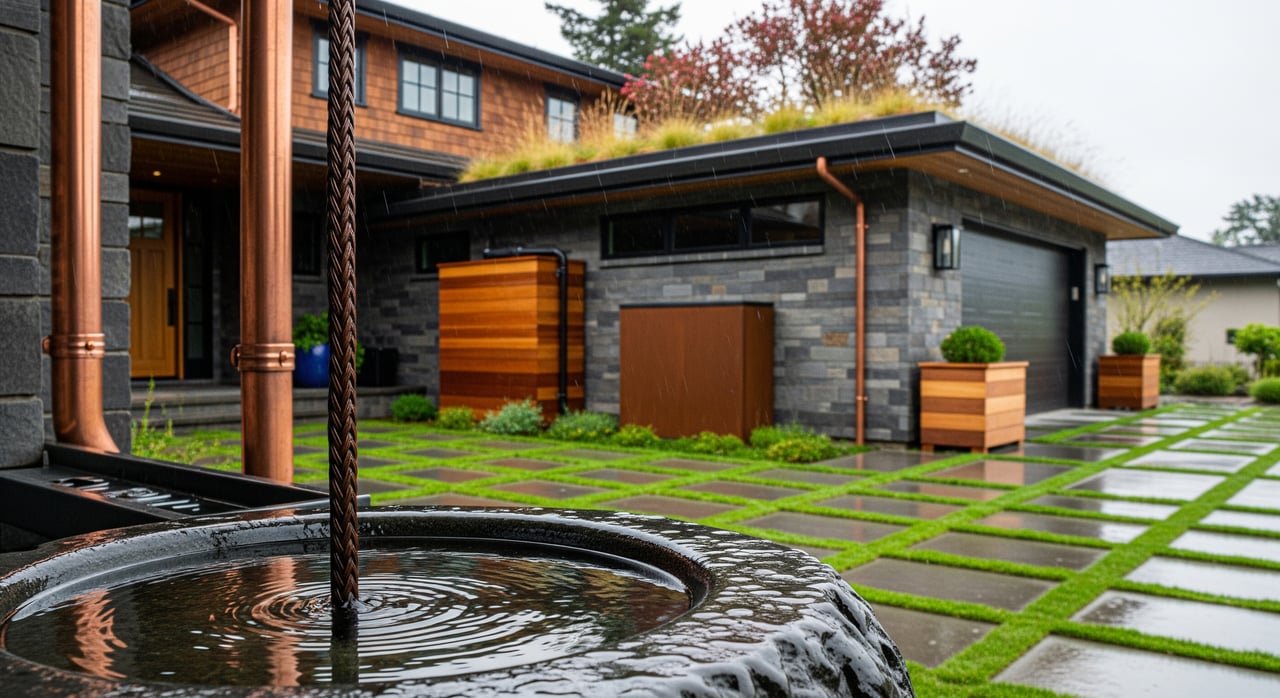
Wish you could stretch a few winter storms into months of landscape watering in Brentwood, Sacramento? With our wet winters and long, dry summers, a simple rain capture setup can turn roof runoff into a steady outdoor water supply. In this guide, you’ll learn practical options, how to size a system for your roof, what local rules allow, and what it costs to get started. Let’s dive in.
Why rain capture fits Brentwood
Sacramento averages about 18 inches of rain a year, with most of it arriving November through March. That seasonal pattern makes stored rain especially useful for summer yard care and for easing peak runoff in winter. The math is friendly too: one inch of rain on one square foot of roof yields about 0.623 gallons. In other words, an inch of rain on a 1,000 square foot roof can deliver roughly 620 gallons before efficiency losses.
- Learn more about Sacramento’s rainfall pattern: Sacramento climate overview.
- See the standard conversion used by engineers and the EPA: 0.623 gallons per inch-foot.
Options at a glance
Rain barrels. Good entry point for many homes. Typical capacity is 55 to 100 gallons per barrel. They are affordable, easy to install, and usually do not require permits. Plan for screened inlets and a safe overflow route.
Cisterns. For 200 gallons and up, cisterns provide seasonal storage that can carry you well into the dry months. They can be above ground or buried and may need pumps, pads, and permits if connected to irrigation or indoor non-potable plumbing.
Rain gardens and bioretention. Shallow, planted basins that accept downspout flow and let it soak into engineered soils. They add curb appeal, reduce peak runoff, and filter pollutants.
Dry wells and infiltration trenches. Underground storage that slowly releases water into native soils. They require permeable soils and careful siting away from foundations or septic systems.
Permeable paving. Driveways or walks that let water pass through to a drainage layer instead of running off. Useful when you are already planning hardscape updates.
Downspout diversion. Direct downspouts into planting beds or a rain garden instead of the street, as long as soils and grading can handle it.
Smart sizing for your roof
A quick way to estimate annual capture potential is:
- Roof area × annual rainfall × collection efficiency × 0.623.
For a 1,000 square foot roof in Brentwood using 18 inches per year and a 75 percent collection efficiency, you could capture about 8,400 gallons per year. One 1-inch storm would yield roughly 1,000 × 0.623 × 0.75, or about 470 gallons. That helps you decide whether a pair of barrels, a 200 to 500 gallon cistern, or something larger fits your goals.
- Reference for the formula and efficiencies: EPA rain capture basics.
Permits, rules, and incentives
California’s Rainwater Capture Act confirms that collecting rain from your roof for non-potable use outdoors is allowed and does not require a water-right permit. If you plan to plumb rainwater to indoor non-potable uses, you will need permits and approved treatment and safeguards.
- State law overview: AB 1750 Rainwater Capture Act.
- Plumbing standards: California Plumbing Code Chapter 16.
There is also a property-tax incentive for qualifying systems. Proposition 72 excludes approved rainwater capture improvements from property tax reassessment, which can help offset upfront costs.
- Property tax reference: Proposition 72 summary.
Historically, the City of Sacramento has offered water-wise rebates that included rain barrels and River-Friendly landscaping. Program details change, so confirm current eligibility and amounts before you buy.
- Check archived program structure and contact the City for current terms: City of Sacramento Residential Rebates.
Site and design tips for Brentwood lots
Clay-rich valley soils are common around Sacramento and often have moderate-to-low infiltration rates. That matters if you are planning a rain garden, dry well, or infiltration trench. If infiltration is slow, consider engineered bioretention media or focus on above-ground storage.
- Soil background for Sacramento County: Sacramento soil survey reference.
Many Brentwood homes have composite asphalt shingle roofs that are fine for outdoor irrigation capture. Metal roofs often yield cleaner runoff and may need less filtering. Avoid using water for anything beyond plants if roof materials or paints could introduce contaminants.
Plan for safe overflow. Direct extra water to pervious landscape or an approved drain, not toward foundations or a neighbor’s yard. Include gutter screens and a first-flush diverter to keep debris out of tanks.
Costs and upkeep
Rain barrels usually run about 50 to 300 dollars per barrel, depending on size and styling. Adding a diverter kit, stand, and hose is a modest extra cost. Cities sometimes sell barrels at reduced prices through special events.
- Barrel cost overview: What rain barrels cost.
Cistern budgets vary widely by material, size, and installation. A simple above-ground poly tank can be cost effective per gallon, while buried tanks add excavation, pads, plumbing, and pumps. Total installed systems can range from several thousand to tens of thousands of dollars depending on capacity and complexity.
- Planning reference: Residential rainwater harvesting manual.
Maintenance is straightforward. Clean gutters before and after the rainy season. Keep tight 1/16 inch mesh on inlets and overflows. Inspect screens monthly during mosquito season and drain or treat standing water as directed by local vector control guidance.
- Mosquito prevention tips: Rain barrel mosquito control.
Quick homeowner checklist
- Confirm your jurisdiction and ask the City about current rebates and permit thresholds for your setup.
- Estimate your roof area, apply the 0.623 conversion and a 70 to 80 percent efficiency, and size storage to bridge dry months.
- Test soils before choosing rain gardens, dry wells, or other infiltration features. If soils are clay, consider engineered bioretention or above-ground storage.
- Route overflow to pervious areas or an approved drain and away from foundations and property lines.
- Choose mosquito-proof hardware and set a simple maintenance schedule for cleaning and inspections.
Real estate impact and documentation
Water-wise upgrades are a plus for many buyers who value sustainability and lower utility bills. If you install a system, keep receipts, permits, and any rebate documentation on file. Note whether tanks and pumps are owned and maintained and where overflow is directed. If a system connects to irrigation or indoor non-potable plumbing, list permits and backflow devices in your disclosure packet.
Ready to talk strategy for presenting sustainable features when you sell or buy your next home? Connect with Andrea Alberts for thoughtful guidance and elevated marketing.
FAQs
How much water can a 1,000 sq ft Brentwood roof collect in a year?
- Using 18 inches of annual rain, 75 percent efficiency, and the 0.623 factor, you could capture about 8,400 gallons per year; see the EPA calculation reference.
Do I need a permit for a simple rain barrel in Sacramento?
- Small, stand-alone barrels used for outdoor irrigation are generally not subject to plumbing permits, but you should confirm with the City’s Utilities or Building Division and review California Plumbing Code Chapter 16 if you plan to plumb systems.
Are rain gardens a good fit for Sacramento’s clay soils?
- They can work with engineered bioretention media or underdrains, but clay-rich soils often infiltrate slowly; check your soils first using resources like the Sacramento soil survey reference.
How do I keep mosquitoes out of rain barrels?
- Use tight 1/16 inch mesh on all openings, keep lids sealed, drain or treat standing water during mosquito season, and follow local guidance such as this mosquito control overview.
Are there Sacramento rebates for rain barrels or rain gardens?
- The City has historically offered water-wise rebates, including rain barrels and River-Friendly landscaping; check the Residential Rebates page for program structure and contact the City for current availability.